How long ago was it since I had a real Pepsi ™ or a real Coke ™, or any other kind of soft drink for that matter? It must have been the early 1980s, but no later than 1986. When did the onslaught of HFCS (High Fructose Corn Syrup) begin? Under Reagan ™, when else would it have begun? Well, OK, as usual, it's not as simple as that. It took successive administrations of Republicans.
For close to an entire generation American soft drinks, and many other beverages, have had this garbage pumped into it, contributing to making many in that generation sick and obese. The soft drink corporations wanted to sell us more of their fizzy-liquids and there were incentives all over the place for corn farmers to implement corn syrup production for use as an all-purpose sweetener (of bottom lines). Note the next time trade agreements between the United States and other nations occur. The recriminations over subsidized American agricultural commodities are sound.
So began one part of this trend so that King corn could thrive at the taxpayer's expense:
Previously neglected because of low yields and bad coloring, HFCS became an industrial reality in the 1960s, when a xylose isomerase enzyme was successfully used to convert glucose into fructose at levels of 42% fructose and higher (Landis 86). That breakthrough, in conjunction with the fact that corn is both planted on nearly 80 million acres (Baker) and is subsidized in the USA (Hopkins), led to a huge gain in HFCS’s popularity because HFSC soon became cheaper than actual sugar. In fact, the “use of HFCS grew rapidly, from less than three million short tons in 1980 to almost 8 million short tons in 1995” (Forristal). Furthermore, “during the late 1990s, [the] use of sugar actually declined as it was eclipsed by HFCS… [And] today Americans consume more HFCS than sugar” (Forristal). ("HIGH FRUCTOSE CORN SYRUP: HISTORY, SPREAD, and CONSUMPTION," Cosmos Cluster 7, 25 July, 2009, UC Davis.edu, P.2)The links to adult and even child diabetes and obesity are gradually coming in from academic studies and are sure to continue coming in; but just take a look around the social landscape. We've gotten fatter. The worst part of all of this is the sheer number of sources that Americans get HFCS from, but one of the most jam-packed ones is from soft drinks. The average American gets 200 calories-per-day from HFCS. No one ever accused Ronald Reagan's administration--or subsequent ones--correctly that they were against subsidies for large-scale farmers and agribusiness. Reagan was all for it. So was most of Congress during the 1980s, and selling to grain to the former Soviet Union didn't bother them either. Pork? Don't get me started.
Just a few years ago I was shopping at a local supermarket chain and lo-and-behold, in the Mexican foods section was a real find--Mexican Cokes. Who cares, right? Me! Other shoppers, other households, who remembered what soft drinks used to taste like previous to the 1980s! The truth is, the problems really began--as they often did--under Richard Nixon:
In 1973, Earl "Rusty" Butz, President Nixon's USDA chief, did away with the agricultural price supports introduced by the Roosevelt administration. These supports were intended to protect farmers' finances by limiting supply when bumper crops would have otherwise flooded the market and to avoid squeezing consumers by releasing the warehoused grain when crop yields were low and prices would naturally spike. Butz ginned up political support for the administration by encouraging farmers to plant "fencerow to fencerow" while the government provided them with subsidies to cover the difference between market prices and production costs.
Of course, growing "fencerow to fencerow" did exactly what one would expect: production exceeded demand, and prices took a dive. This didn't sit too well with Archer Daniels Midland (ADM), the nation's largest corn refiner.
Now, there's only so much corn one person can eat. ADM suddenly needed to figure out how to somehow stimulate sales of all that excess food. ("America's Crazed Corn Habit," Mises Institute, 12.22.2009)Thanks again Dick! Indeed, we are "all Keynesians now," and so was Reagan! I could have told you that, and I'm not even remotely an economist.The best part about those Mexican Cokes™ was that they were in glass-bottles, so icing them up wasn't going to be a problem, that taste was coming, and those coveted bottles didn't disappoint at all. Why? Because Mexico doesn't have the kinds of crop subsidies we do on corn, they don't put HFCS in everything for that and a variety of other reasons, they got it right. I bought-up as many of them as I could that summer, it was a real treat, and it ended quickly. The local bottler had them pulled, they're gone.But how did throwback Pepsi™ taste to these buds? Coupled with the vintage packaging, it was like being rocketed back to better times--or at least better than now, the 1970s. I was literally taken aback at how familiar it tasted, I hadn't forgotten after decades of HFCS film on the surface of every soft drink (and the roof of my mouth), even in fruit juices! Childhood memories and images flooded into my brain after that first sip. It was truly refreshing in the best sense of the word. I could recall some blistering summer days that were punctuated with a Pepsi™ or a Coke™, and they tasted so much better back then because they were made with cane sugar rather than HFCS.
I didn't notice as much of a change with their throwback Mountain Dew™ (before there was meth...), but the Pepsi was perfect, and the throwback packaging really takes me back to another America. Not necessarily a better one, but one before the fall of America to Reaganism and a slimmer public! Oh yeah, and early in 2009 it was found that mercury is often found in trace amounts in HFCS.
Biased, but in a reasoned sense (better to err on the side that HFCS's bad): http://www.highfructosecornsyrup.org/"America's Crazed Corn Habit," Mises Institute, 12.22.2009: http://mises.org/daily/3934
Showing posts with label 1970s. Show all posts
Showing posts with label 1970s. Show all posts
Sunday, January 10, 2010
Product review: "Throwback" Pepsi™


Wednesday, October 18, 2006
The Ruling Class (1972) review
Could there be a film crazier than Marat/Sade (1966)? Yes, it is the O'Toole/Medak/Barnes collaboration from 1972, 'The Ruling Class.' One could be forgiven in thinking this was a Ken Russell film, but it isn't like he was alone in making blistering-cinema during the late 1960s, early 1970s. We will probably never see an era in movies like this again, it was so free and unfettered by the studio system that it pushed the envelope forever (only to have what is acceptable in commercial cinema recede again). Many viewers would say this kind of film is overindulgent, but that is entirely the point. The Ruling Class was originally given an 'X' rating in the UK in the 154-minute cut, but was released with 20-minutes removed in the American PG-version.
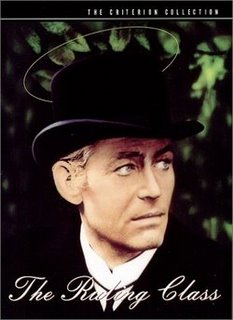
The 2001 Criterion edition is the first time the film has been widely-available in this original cut as it was shown at Cannes. There is no better edition, it is perfect, and a must-own for anyone who loves serious cinema.
The story began as a successful 1968 play by Peter Barnes, and it was considered bizarre for its anti-naturalism, as well as the comments on the English aristocracy. If I describe much of it, the effect will be ruined, but there are musical numbers in a movie that is not a musical (similar to Brecht here). Similar to Artuad's 'theater of cruelty', the approach is to alienate the audience in particular moments--sometimes throughout the entire piece! This was common in the cutting-edge cinema of the time, just watch A Clockwork Orange (1971), Ken Russell's The Devils, or even Midnight Cowboy (1970). Barnes rewrote the screenplay with very few changes, but don't think that the O'Toole/Medak version is simply a filmed play. It is not, it is much more than that.
At once, a parable on the folly of belief systems, it has much to say about the flimsy glue that is the ruling-class anywhere. Some hierarchy is inevitable in this life, but do we want crazy imbeciles running the developed world? And what of psychiatry or academia? Both are beholden to their own class assumptions, as The Ruling Class amply illustrates. Oddly, it is all about the end of all belief, a hallmark of the time it was made in.
The story is pretty strange, yet plausible: the 13th Earl of Gurney (Harry Andrews) has accidentally hung himself in an act of autoerotic asphyxiation, a monologue/prologue scene that lasts over 15-minutes! It's riveting, nonetheless. With the old Earl dead, there is only one heir left for the Lordship of the Gurneys: the Earl's crazy son, Jack (O'Toole). Jack is completely insane, and thinks he is Jesus Christ, messiah and savior of the human race. The would-be Lord is a paranoid-schizophrenic. He is so insane, his speech patterns betray him immediately. He has constant tics, and flights of fancy that defy words, and make this the finest performance by Peter O'Toole in any film (it's his favorite of all of his film performances).
The performance was nominated for numerous awards in 1972. He really is a sweet character in the first half of the film, and shows some wonderful humanism that is lacking in the rest of his kin. His only conscience is the butler (James Villiers), a closet anarchist! His character recedes as Jack becomes...even more oddly different.
With Jack insane, his uncle Sir Charles (William Mervyn) sets-out to get him declared by a German-psychiatrist he has hand-picked...or has he? It appears that his sister, the Lady Claire Gurney has had an affair with the analyst, and has other-plans for Jack and the whole situation. But Charles has decided he can control Jack through a call-girl he has groomed as the heir's wife, a Grace Shelly (played by the super hot Carolyn Seymour). They are eventually-married by the very reluctant Bishop Lampton (the legendary Alastair Sim!), a distant relative in the Church of England. In such an environment of intrigue, being a paranoid-schizophrenic would be a natural reaction, so one is struck by the fact that being one of the 'ruling class' means to be eventually driven mad. The jokes are biting in this one, with some of the best retorts I have ever heard! To sum it up, the factions are battling for control of the estate through Jack, who is 'J.C.' in the first half of the film. The German psychiatrist finally decides he can cure the would-be Lord with a radical-approach: he finds another madman (the 'High-voltage Messiah', an insane Scot played unforgettably by Nigel Green) who thinks he is God, and puts them in the same room together. It should be noted that Green died after the end of shooting from a barbituate overdose.
This approach of 'two gods in one room' actually has been attempted in psychiatry before, but it usually doesn't work; the delusions are impenetrable. The problem is, the High-voltage Messiah thinks he's the Old Testament God of Wrath and destruction, and it causes a crisis in Jack's version of Jesus, destroying it utterly. You could say that both characters embody the Manichean mythos, and that they hold a heretical view of religion. The High-Voltage Messiah represents the 'demiurge', the blind idiot god of gnosticism, while Jack represents gnostics who believe in the Christ within. Previously, Jack has denied his name as part of his illness and just wanted to be someone else. This is interesting, since early Christians often were given a new name upon entering the cult. Unfortunately, this warmer Christ personality is gone after the treatment, and all that is left is the Old Testament God, and so, Jack takes on the role he was destined to all along. 'I'm Jack, I'm Jack,' says the future Lord, and the psychiatrist and the family think a cure has occurred. 'I'm Jack, alright...Jack the Ripper,' states O'Toole in a moment of hilarity and horror. Instead of the Prince of Peace, he's begun advocating bringing the 'noose back to England', and nobody in the ruling circles notices him as odd anymore. It's really sums up the tone of the film. Most unsettling is the image of the German psychiatrist carrying a cardboard-cutout of the murdered Lady Claire around, yelling 'Cock-a-doodle-doo!'
It becomes clear that Jack is going to be the quintessential 'Lord of Old', a murderer and a punisher, a warlord and an ancient patriarch who kills his children to feed the bloodlust that is at the heart of the will to power. Nobody will be controlling Jack: the butler is off to prison, Charles and the Bishop are off to a nursing home, and the rest had better watch their backs. He dispatches a few of them forthwith. There are a number of scenes that are expressionist: we see some of Jack's hallucinations, such as when he murders Lady Claire in an 1888 Whitechappel-setting, or when he comes to the House of Lords for the first-time--he sees all of his peers as rotted, animated corpses, intercut with what we see. Jack views reality through a poetic lens, nonetheless.
This latter scene speaks volumes of the undead nature of ruling institutions, and used to be applied to the Catholic Church; it is a Medieval notion. But, it could apply to the aristocracy of Great Britain, which seems to be eternal. It should be noted that the film is a great technical achievement in cinematography and composition. There are also very creative applications of sound elements that aren't related to the images, which are very effective, and are reminiscent of similar techniques in Midnight Cowboy. Bizarre, sexy, unsettling, entertaining, thought-provoking, and classic. The ending? There is no end to this story.
Subscribe to:
Posts (Atom)