Tokyo--The Toyama No. 5 apartment block may have been built on a mass-grave used to hide the remains of one-hundred Asian-victims of medical-experimentation, says an 84-year-old Japanese woman.
Her name is Toyo Ishii, a former military nurse with Unit 731, a biowarfare-unit of the Imperial Japanese Army during the Second Sino-Japanese war that bled-into WWII.
Most of the experiments occurred in Manchuria, so I was perplexed by this AP story. Certainly, Chinese nationals were taken as slave labor to the Japanese mainland, but it's surprising that experiments were conducted in Tokyo as well. 1989 excavations nearby attest that they did. Why? Look at the neighborhoods they were in: slums, therefore it was easier to control what the middle-class of Japan at that time knew about it. Who would care what a slum-dweller thought? This is why serial killers murder the indigent and prostitutes.
American and Soviet POWs were also exposed to the experimentation, but it was the Chinese who received the brunt of the project. The Chinese suffered under innumerable atrocities under the withering-attacks of the Japanese Imperial Army.
Her name is Toyo Ishii, a former military nurse with Unit 731, a biowarfare-unit of the Imperial Japanese Army during the Second Sino-Japanese war that bled-into WWII.
Most of the experiments occurred in Manchuria, so I was perplexed by this AP story. Certainly, Chinese nationals were taken as slave labor to the Japanese mainland, but it's surprising that experiments were conducted in Tokyo as well. 1989 excavations nearby attest that they did. Why? Look at the neighborhoods they were in: slums, therefore it was easier to control what the middle-class of Japan at that time knew about it. Who would care what a slum-dweller thought? This is why serial killers murder the indigent and prostitutes.
American and Soviet POWs were also exposed to the experimentation, but it was the Chinese who received the brunt of the project. The Chinese suffered under innumerable atrocities under the withering-attacks of the Japanese Imperial Army.
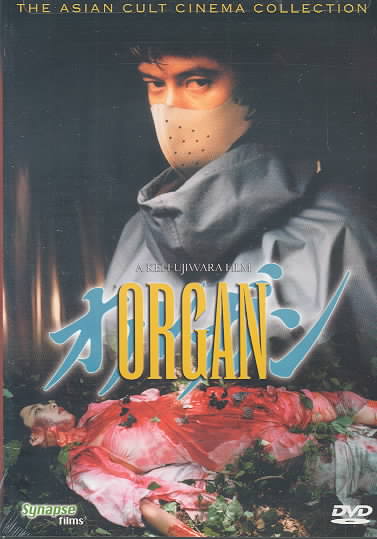
Also interesting, is the fact that Ishii says she wasn't in the section of the unit that did vivisections or injected Asians with virulent-diseases for research purposes. Granted, it was a sprawling-compound...in Manchuria, but would it have been within Tokyo? Would the Japanese military really want the public to see what was going-on in the Tokyo facility? Even under a military-dictatorship, it could be problematic. Surely, the facility was a very small one. One has to wonder if director Kei Fujiwara's film "Organ" was inspired from this tale...
Nurse Ishii claims she was employed in 'oral-surgery' during her time with Unit 731. Another interesting-fact: she has the same last-name as the administrator of the project, Dr. Chujo Shiro Ishii. Are they related? 'Ishii' means, 'rock well'. It gets even more interesting. Dr. Ishii was given legal-immunity after the war:
Although Unit 731, and its satellite laboratories were destroyed at the end of WWII, with the full co-operation of General Douglas MacArthur, Dr Shiro Ishii was given immunity from prosecution. The US authorities considered Ishii's research programme to be too valuable to be revealed in public. It is on record, as the author notes, that Ishii lectured in the United States after the war, and that he and other Unit 731 researchers went to South Korea in 1951 to advise the US military on biological warfare. Immunity from prosecution for war crimes was given to dozens of Unit 731 employees by the US government. (Brown, Sept. 2004)Could the nurse be one of the individuals who was granted amnesty? We're not told. Are the sundry facts of Unit 731 still being kept secret because of Japanese-American relations? We're not told. Were they part of security and economic treaties? We're not told. These are valid questions that aren't present in the articles on nurse Ishii.
The Japanese government still officially refuses to acknowledge that the atrocities committed by this unit ever happened. Government ministers have played-down the possibility for any exhumations, even for regarding the Shinto-observance of honoring one's ancestors. Besides, they might be saying, they're Chinese and Korean dead, not Japanese. I don't think most Japanese citizens want to know what really happened at Unit 731 facilities.
This is troubling, but not atypical, in my humble opinion. Whatever the truth is, it appears the Japanese government doesn't want to know it--or for it to be known. And you thought the Japanese were quaint. You were wrong. While President George W. Bush makes his case for a stand against Iran, as well as the genocide in Darfur, stories like this tend to get lost because of their inconvenience and dissonance with the "accepted narrative." We should remember how these events became possible by knowing more about them and how they came-into-being.
There are many in the political classes of the developed-world who don't want this. The story of Unit 731 is emblematic of this. Apologies to China aren't going to be enough, there has to be a full-accounting. There have been American survivors who have come forward, only to be ignored by the American Congress in the late-1980s.
It's true that a few members of Unit 731 were hanged, but not the ringleaders. Japan has never fully-admitted or apologized for such atrocities in China, which should make them suspect as a nation wanting a seat on the UN's security council.
When they admit that they also exterminated American and British POWs, and when their ministries do what Germany did, then maybe. I'm sure there are Soviet POWs in there somewhere as well, and it's likely that they will get the usual brush-off without any living advocates.
Revised 09.07.2008