Only available directly from the artist in a limited edition of 2,000, this is the hands-down contender for the best of the four Jesu releases for 2007. A lot of readers and fans of Jesu aren't going to like this observation, but I think it's in order: February's release of 'Conqueror' was a mixed-bag that featured some very powerful psychedelic hard rock songwriting (usually compared to early-1990s 'shoegazer rock' like My Bloody Valentine), but it fell flat overall and lacked the emotional power that one generally expects from the artist.
That being said, it's still pretty good and almost sounds very 'up' at times! It all sounds like a strange description of the music from one of the founders of Napalm Death, doesn't it? Conversely, the recent 'Lifeline' EP kills, and it's a sign of real growth. The same could be said about 'Pale Sketches.' A lot of die hard metalheads are going to say this is just another example of how Justin Broadrick lost it long ago (after Streetcleaner), that he sold-out, and that he's gone soft. Like gorehounds, religious fundamentalists, and orthodox punks, who really cares what they think anyway?
The 'shoegazer' comparisons are apt, however, as Broadrick has collaborated with Robert Hampson of Loop and Main (Hampson is the second guitar on the stunning 1992 Godflesh opus, 'Pure'). Loop was a great late-80s, early-90s throwback to droney, fuzzed-out 60s psych, and still ranks highly in the 'shoegazer' pantheon. Do yourself a favor: find Loop and give it a listen, it's the real deal. Conqueror isn't a bad album, but there are some very run-of-the-mill rock standards present on it, a very 'been-there, done-that' affair on about half of the album's songs. I didn't expect a repeat of Godflesh, or even the sometimes extraordinary Techno Animal, or ICE, but there were about four-of-eight songs that really soared. Considering what else is out there right now, that's not too bad. The artist was overdue for a straight-ahead hard rock album, and we can expect every Jesu release to be different from the last.
Granted, all of this is coming from a longtime-fan of the music of Justin K. Broadrick: I've been hooked on just about every release he's done ever since a college acquaintance loaned me his copy of 'Streetcleaner' in late-1991. I don't expect the nihilism or the crushing heaviness in these new releases, but what I do expect from Justin is that his music moves me, that he presents me with a little something that I've never heard before, and to basically do something new somewhere in the arrangements. Even the Beach Boys managed that.
'Conqueror' does manage this occasionally, yet the crowning track 'Weightless & Horizontal' could be considered one of Justin's greatest contributions to rock songwriting. To say it's an epic anthem would be an understatement, it simply destroys while it lifts the spirits, clocking-in at ten-minutes of bliss. 'Old Year' was also a great rocker on Conqueror, and has a very shimmering quality to it, and it has that incredible feeling of yearning that all great music has. That's what one usually expects from Broadrick--something deep, something epic. There just wasn't much of that on Conqueror. Little has changed in the overall sound since Godflesh, but there's a distinct lack of much dissonance with a more harmonized approach. You cannot always be angry, outraged, and crying--sometimes it has to end. What comes after nihilism?
Enter 'Pale Sketches,' which has been available for a little over two-months at this writing. Where Conqueror fails at times, Pale Sketches succeeds-in-spades: it is epic, it is moving, and it speaks volumes on the sorrow and the emotional torture of this peculiar era we're inhabiting. This was also the feeling one got from Godflesh, Techno Animal, and many of Broadrick's countless side-projects up until 2003. Even the first Jesu full-length from Hydrahead (the self-titled 'Jesu') accomplished this with an almost cathedral-like structure. Not so strangely, many of the tracks on Pale Sketches date between '2000-2007,' and Conqueror overlaps the same period. What you have here is an artist with so many sides that it's probably difficult to decide which songs belong on any given release! Considering that this is the first release in seven years from his Avalanche imprint, Pale Sketches ranks as a very special release for Justin in every respect, even with its dismissive title. In many ways, it's exactly what I've wanted to hear for several years from him.
If I would compare the music on Pale Sketches to a particular band, it would be Joy Division. There's a great balance of heaviness, electronics, heavy sound-processing, and that strange tone of sorrow and joy coexisting together. That aesthetic is exactly what makes the music of Broadrick so timeless and so powerful when he's at his best. Songs like 'Dummy' take elements of the very best of UK post-punk with an injection of elements of the present. The result is the future. 'Supple Hope' could have almost been a Godflesh song, except that most of the arrangement focuses on some beautifully-layered electronics and some truly inspired vocals. Guitar is backgrounded, and there is more than a hint of an Eno and krautrock influence in the sounds and arrangements (with a dash of 'Frippertronics' ala' James Plotkin of that other grindcore band Old).
Maybe Justin Broadrick had tired of the crushing sound and nihilism of Godflesh by 2001 (I was also ready for something new), but the sorrow remains fully-intact in all his releases in 2007. The changes in his sound are a move towards the melodic and the poppy. To many old fans, this is sacrilege, and Broadrick has expressed the feeling that he's not going to miss them. Considering many of them are fixated on Streetcleaner, I'd have to agree. Even so, the excitement of creativity, curiosity, and discovery have also carried-over from the years predating Jesu. Half of Pale Sketches comprises songs, while the other half are instrumentals. Every one of them is a classic balance of heavy rock combined with electronics just waiting to be discovered by the curious. Contrary to most of the reviews--and even comments from Broadrick himself--this is significantly more psychedelic than Conqueror.
This miscellany of tracks (as most releases by Jesu are) is the real 'Conqueror,' and hardly a collection of 'Pale Sketches.' It's another great observation that life is a strange combination of misery and joy, beauty and ugliness. That describes the music of Justin K. Broadrick in every respect, especially in his current incarnations. Making those two elements harmonize is what makes some of his work very inspired, even genius. This man has grown, showing us emotional vistas that we never thought possible through his music. The occasional misfire will be well worth it.
Showing posts with label Brian Eno. Show all posts
Showing posts with label Brian Eno. Show all posts
Wednesday, December 12, 2007
Jesu's 'Pale Sketches' album (2007) review


Friday, October 20, 2006
Techno Animal's 'Re-entry' (1995): The Best Album of the 1990s?
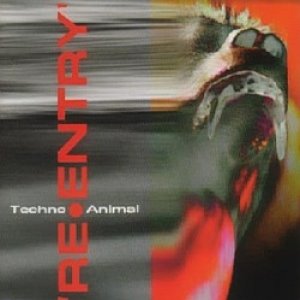
There are albums that impact the fabric of popular music in a way that is lasting, and this was one of them. Nobody ever caught on to JK Flesh's (Justin Broadrick of Napalm Death, Godflesh & Jesu) and KMart's (Kevin Martin, GOD, ICE) albums, and they were missing-out. After hearing their first CD, "Ghosts" (1991), I was terrified!
There are no words for the sonic assault they had on that album, it was very sample-based, and very industrial-sounding (like Throbbing Gristle or Faust). Re-entry has the same feeling that "Bitches Brew" gave me on that first listen--there was a newness that felt like they were looking into the future, and it was exciting. There is a strange trippy utopianism to the electric period of Miles, but Re-entry is dystopian and menacing. Yet, there are aspects of Techno Animal's oeuvre that can even sound elegiac and dreamy, a kind of "flowers in the ruins" quality that's beggars description. Most of the material was done with samplers and computers and is best described as electro-acoustic studio compositions with some live elements thrown-in.
Most of Re-entry has a kind of "noirish"quality that would fit well into the world of Blade Runner. Broadrick and Martin's music has a strange way of making the end of everything seem beautiful and poetic, like the writings of Thomas Pynchon. For this reason, it is very spiritual in an existentialist sense, a kind of musical raging against the abyss that I enjoy. Re-entry has some excellent hip-hop beats and electronics over an ambient soundscape, but you could imagine this stuff blaring over the destruction of Baghdad too. It has the quality of music one would imagine the imperial courts of the Mandarins or the Rajahs had. It's very psychedelic--like a fever dream--a haze of intoxication, often conveying a sense of the pastoral and the arboreal. Some tracks miss-the-mark, but it's an amazing 2+ hours for trainspotters and music addicts. You don't need drugs here, this music is drugs. But if you ever really want to scare-the-shit out of rap fans who play their bass too loud on their rigs, play this very-very loudly around them. The white-noise and subharmonic-frequencies alone will force them leave its proximity.
In the spirit of fairness, I have to mention the other CD of 1995 that is its coequal--Scorn's "Gyral" (Mick Harris, formerly of Napalm Death), an artist who definitely influenced the creation of Re-entry. If I was to describe the Scorn of the mid-1990s, it would be a dub sound with hip-hop beats and sampled-textures (often ambient), and very dark, even Apocalyptic. That's the kind of music that seems to emanate from Birmingham, England. But Re-entry has the same approach to that electric-period Miles, and even a few players who worked with him during that the 1960s-70s. Complimenting this is the legendary Jon Hassell who created his own "4th world music" (a hybrid of electronics, free-jazz, serialism, minimalism, and more). Hassell came out of the "no wave" scene of the 1980s along with Bill Laswell and others.
It's funny how I finally got a copy of Re-entry: it came by-way of Mick Harris himself in 1999. We were trading music through the mails at the time, and Reentry was part of a trade. You couldn't find this album at the time, it just vanished in the US after 1995 just barely making its release through Caroline. Yes, Justin had given the CD to him through the mails--that's how difficult it was for me to find it. Two former members of Napalm Death owned it. I'll never sell it, never! I assume it did much better in Europe, but it wasn't a big commercial success. Again, Virgin records didn't even bother releasing it widely in America even though it was part of an ambient series that included Brian Eno, Hassell, the Orb, and many others. The Wire magazine listed Re-entry in their Top 50 albums of 1995, but musical tastes are more educated and eclectic in the UK than they are here in the US. The UK edition to the Soundtrack to "The Acid House" (an Irvine Welsh story, the author of Trainspotters) has a Techno Animal cut, while the US edition omitted it altogether! That says it all, doesn't it? Artists like Broadrick and Martin are anathema to an industry that has tried to compartmentalize music into genres, and the public also prefers this. With the advent of the Internet, it just seems inevitable that the genres will break down eventually since they're ultimately artificial, and when the original commercial and emotional reasons for them no longer exist, they'll be gone.
The invention of genres and the cult of personality have held music back for a very long time. Music itself has to be organic and ever-changing for it to survive, like life itself, its source. Music cannot stop moving, or it has already died. Like art hanging in a gallery, it has lost its edge and its dangerousness and has been tamed. Something old, something new...I want to hear Jon Hassell cutting-loose over an ambient beatscape with his trumpet some more! These guys are innovators, and they therefore defy categorization which is problematic to lazy music journalists and mainstream labels (the ones that have survived!). Techno Animal folded in early 2004 after a number of failed-attempts at capturing some kind of access to the mainstream, the most notable being their hybrid rap opus "Brotherhood of the Bomb"(Matador records, 2001), which featured heavily mutated hip-hop tracks with seasoned underground MCs. The results weren't that great and neither was the reaction.
Some cuts work, but most of it just didn't click with most rap fans and the North American tour had a very mixed-response. Ironically, the tracks that worked best were instrumentals. Yet, you have to have people like them to achieve any innovations and the music industry knows this very well. Without some form of forward movement, people begin to lose interest (too late!). With no cutting-edge artists being put out there, they start downloading Eminem and copying it to a CDr or an iPod. Or, they finally break down and start making it themselves.
Before you download that album or track, just be sure to pay artists like Justin & Kevin, they've earned that right. At least they're experiencing some success of late--Justin with Jesu and Martin with The Bug (HARD dancehall techno). Someone has to write the soundtrack to the Apocalypse. If not them, why not YOU?
Revised, 08.01.2009
Subscribe to:
Posts (Atom)