'Oh Christ, oh Jesus Christ!'
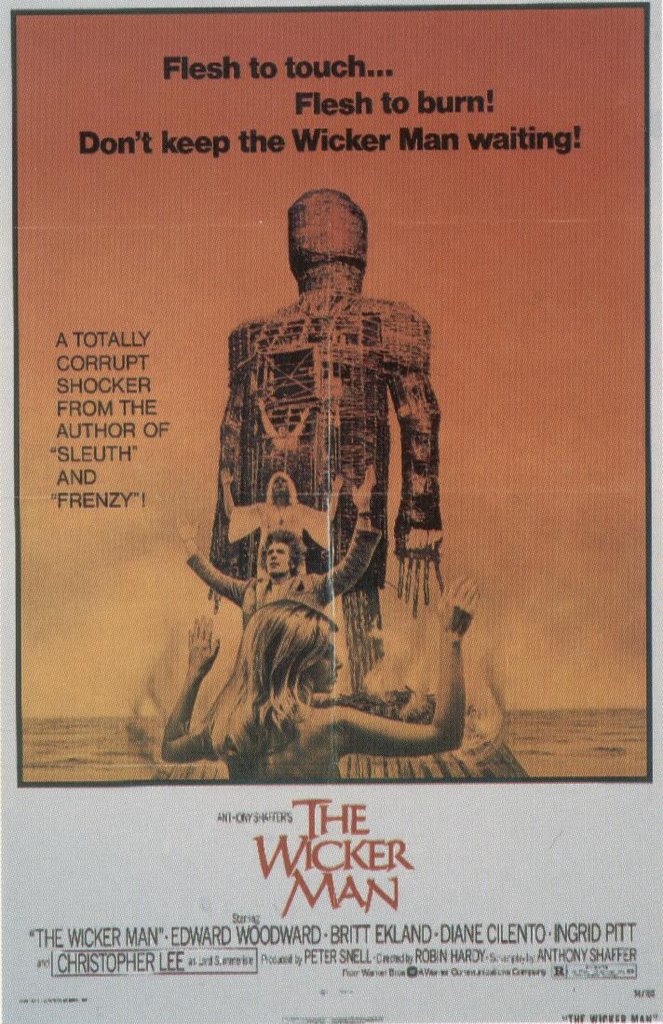
Christopher Lee is dismissive of a lot of his screen-work, but this is one of his favorites (along with The Whip and the Body). It's hard to call this a horror film, but I guess you could say it is, depending upon who you root for. There really are no villains in this film, and hardcore religionists who would say the pagans who inhabit the island are evil are just flat-wrong.
Western civilization still has its sacrifices in our American death penalty, and in warfare.
Almost every generation is called-up to give of their numbers to Mars and the bottom-line. So-called conservative economists argue that a minimum-of-poverty is needed to maintain the tyranny of consumerism, the New Fascism.
There are sacrifices-aplenty in our 'modern' world, and the results are hardly-removed from pagan-sacrifices, just physically-removed and indirect from our daily lives (what could be more modern?). Oddly, the film is critical of both the ancient and the modern.
No, this is more a thriller with a 'horror reveal' at its climax, as it was originally conceived by director Robin Hardy. Sadly, the producers of the failing UK studio balked at his cut, and we have been left with cobbled-together theatrical and 'director's-cut' versions of the film with many of the scenes and insert-shots restored, but from shoddy sources like videotapes. The original-negatives of deleted material were hidden in a hole on an English country road according to Christopher Lee and others close to the production.
Why? Why did RKO destroy an hour of Orson Welles's 'The Magnificent Ambersons'? Revenge for Citizen Kane, of course. This is done as retribution by some producers, so that a director can never reinsert the footage. Why? Partly because producers cannot usually create movies like a director does, and some of them resent this fact. It also gives them a chance to legally-assert authorship, and thus solidify their ownership of a 'property' based under international copyright laws.
Due to the butchering of The Wicker Man, Christopher Lee has attempted for decades to do a remake, but it appears that this isn't going to happen with him now, and he refuses to discuss the Cage version.
The Nicholas Cage remake can only suffer from this fact, since it doesn't improve-upon the original. It actually does a poorer job, yet has a budget almost twenty-times the 1973 version. The remake basically says nothing-new, and actually takes a very wrong-headed attitude towards women.
Literally 'stealing the show', Lee plays the enigmatic and charming Lord Summerisle, and he haunts the entirety of the Wicker Man until the brutal ending. The other protagonist of the film is the character of Sergeant Howie, who has been sent by the mainland-Police to investigate the disappearance of young-girl on the island, namesake of the Lee character.
This island is Lord Summerisle's domain, and he has re-instituted various pagan beliefs alongside the island's agricultural-base or fruit orchards in the cold and hostile environment of the Hebrides. Temperate fruits aren't supposed to grow there, but miraculously, they do. The cop is entering a world he (and we, the audience) never knew existed. Unlike the remake, I'd say the Summerisle seems inviting and sensual. It's a place you might want to call home. As a stodgy-Christian, Howie doesn't really get this, and it seals-his-fate, creating a nice touch of irony.
It appears the 'new-beliefs' (really ancient, British-ones) are working, for the crops are abundant and the people of Summerisle seem happy and prosperous. There are numerous references to fertility symbols, and the musical-numbers are both inviting and haunting (if not a little goofy), and they lull Howie and the viewer into a complacency (as pagan rituals do to their sacrifices). Seargeant Howie (a daft-name, chosen so the audience doesn't fully-identify with him) is being tested by the pagans for his purity, and the gorgeous Britt Ekland is the bait, though her acting is a bit 'wooden' (or is it 'Wicker'?).
Still, she and her body double add a great erotic flavor to the film that makes paganism seem pretty inviting. Well, unless you're the sacrifice, though believers would likely have no-problem. This then, is the horror component of the film, a non-believer sacrificed by believers in an irrational-rejection of modernity. This kind of romanticism fueled the rise of Nazism, and the burning of the scapegoat.
There are many-reviewers who have said this is about a battle-between paganism and Orthodox Christianity. This is accurate, but there are some nuances to this, and comments on the surrender to irrationality by the pagans and Sergeant Howie.
Let's face it: the cop isn't likable, and we aren't really supposed to identify with-him until the end of the tale as simply another human-being caught-up in something he never wagered on. But that's where it ends. The current version of the 1973 Wicker Man is definitely flawed.
Like a pagan initiation, the story begins as a mystery, both tempting-and-warm, even human. The initiate penetrates more-and-more layers of the mystery of the cult until...you'll have to watch the movie, it is an ending for-the-ages. There really isn't any gore here, just a little-blood, so gorehounds won't like it, but who cares what they think? This is inverted-horror.


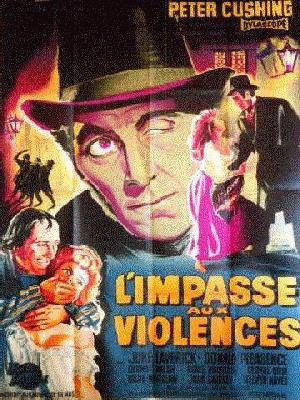
 fairly truthful accounting of the original 'bodysnatchers,' Burke and Hare who resorted to murder after running out of 'fresh' corpses for a Dr. Thomas Knox, of Edinburgh, Scotland. It is a scandalous story that would never have been possible were it not for antiquated religious notions that it was unholy to disinter the dead--even if approved by the deceased and their survivors--for the purposes of medical inquiry. Shot in an shadowy expressionist black, there are few films that top this in the horror canon. Hammer had some great films, but this is really the capper. Burke and Hare just wanted money to drink and whore. In the squalor of early industrial Britain, there were precursors to Jack the Ripper, and Burke and Hare could have taught Jack a few lessons.